Whole Wheat Flour vs. Raspberries
Nutrition comparison of Whole Wheat Flour and Raspberries
Ever wonder how your favorite foods stack up against each other in terms of nutrition?
We compared the nutritional contents of
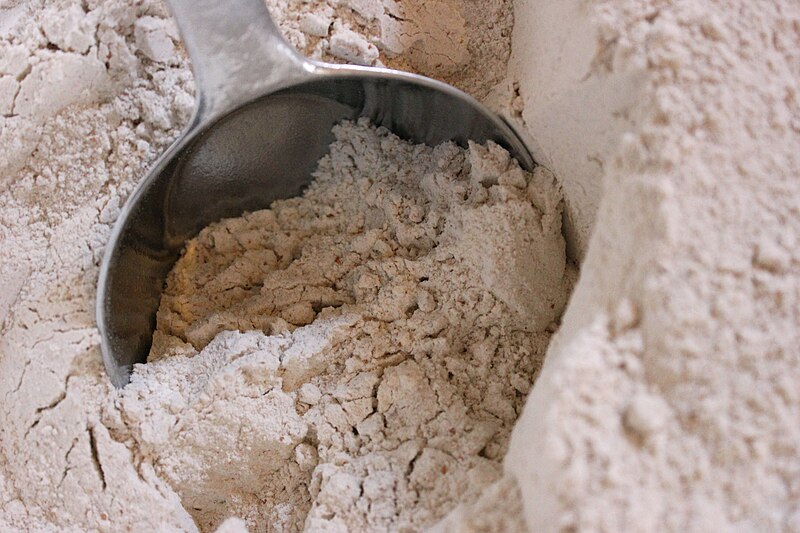
whole wheat flour
versus
raspberries
(100g each)
below using 2020 USDA and NIH data[1].
For a quick recap of significant nutrients and differences in whole wheat flour and raspberries:
- Both raspberries and whole wheat flour are high in dietary fiber.
- Raspberry is an excellent source of Vitamin C.
- Whole wheat flour has more thiamin, riboflavin, niacin, pantothenic acid and Vitamin B6.
- Whole wheat flour is a great source of protein.
- Whole wheat flour is an excellent source of iron and potassium.
USDA sources for nutritional information: Whole Wheat Flour (Wheat flour, whole-grain, soft wheat) and Raspberries (Raspberries, raw) . Have a correction or suggestions? Shoot us an email.

Calories and Carbs
calories
Whole wheat flour is high in calories and raspberry has 84% less calories than whole wheat flour - raspberry has 52 calories per 100 grams and whole wheat flour has 332 calories.
For macronutrient ratios, whole wheat flour is lighter in fat and similar to raspberries for protein and carbs. Whole wheat flour has a macronutrient ratio of 11:84:5 and for raspberries, 8:81:11 for protein, carbohydrates and fat from calories.
Macro Ratios from Calories:
| Whole Wheat Flour | Raspberries | |
|---|---|---|
| Protein | 11% | 8% |
| Carbohydrates | 84% | 81% |
| Fat | 5% | 11% |
| Alcohol | ~ | ~ |
carbohydrates
Whole wheat flour is high in carbohydrates and raspberry has 84% less carbohydrates than whole wheat flour - raspberry has 11.9g of total carbs per 100 grams and whole wheat flour has 74.5g of carbohydrates.
dietary fiber
Both raspberries and whole wheat flour are high in dietary fiber. Whole wheat flour has 102% more dietary fiber than raspberry - raspberry has 6.5g of dietary fiber per 100 grams and whole wheat flour has 13.1g of dietary fiber.
sugar
Raspberries and whole wheat flour contain similar amounts of sugar - raspberry has 4.4g of sugar per 100 grams and whole wheat flour has 1g of sugar.
Protein
protein
Whole wheat flour is a great source of protein and it has 701% more protein than raspberry - raspberry has 1.2g of protein per 100 grams and whole wheat flour has 9.6g of protein.
Fat
saturated fat
Both raspberries and whole wheat flour are low in saturated fat - raspberry has 0.02g of saturated fat per 100 grams and whole wheat flour has 0.43g of saturated fat.
Vitamins
Vitamin C
Raspberry is an excellent source of Vitamin C and it has more Vitamin C than whole wheat flour - raspberry has 26.2mg of Vitamin C per 100 grams and whole wheat flour does not contain significant amounts.
Vitamin A
Raspberries and whole wheat flour contain similar amounts of Vitamin A - raspberry has 2ug of Vitamin A per 100 grams and whole wheat flour does not contain significant amounts.
Vitamin E
Raspberries and whole wheat flour contain similar amounts of Vitamin E - raspberry has 0.87mg of Vitamin E per 100 grams and whole wheat flour has 0.53mg of Vitamin E.
Vitamin K
Raspberries and whole wheat flour contain similar amounts of Vitamin K - raspberry has 7.8ug of Vitamin K per 100 grams and whole wheat flour has 1.9ug of Vitamin K.
The B Vitamins
Whole wheat flour has more thiamin, riboflavin, niacin, pantothenic acid and Vitamin B6. Both whole wheat flour and raspberries contain significant amounts of folate.
| Whole Wheat Flour | Raspberries | |
|---|---|---|
| Thiamin | 0.297 MG | 0.032 MG |
| Riboflavin | 0.188 MG | 0.038 MG |
| Niacin | 5.347 MG | 0.598 MG |
| Pantothenic acid | 1.011 MG | 0.329 MG |
| Vitamin B6 | 0.191 MG | 0.055 MG |
| Folate | 28 UG | 21 UG |
Minerals
calcium
Raspberries and whole wheat flour contain similar amounts of calcium - raspberry has 25mg of calcium per 100 grams and whole wheat flour has 33mg of calcium.
iron
Whole wheat flour is an excellent source of iron and it has 438% more iron than raspberry - raspberry has 0.69mg of iron per 100 grams and whole wheat flour has 3.7mg of iron.
potassium
Whole wheat flour is an excellent source of potassium and it has 161% more potassium than raspberry - raspberry has 151mg of potassium per 100 grams and whole wheat flour has 394mg of potassium.
Antioxidants and Phytonutrients
carotenoids
Carotenoids are micronutrients commonly found in plants and some animal products. An example is beta-carotene, the notable carotenoid which is a popular source of Vitamin A.[4][5]
For specific types of carotenoids, both whole wheat flour and raspberries contain significant amounts of lutein + zeaxanthin.
| Whole Wheat Flour | Raspberries | |
|---|---|---|
| beta-carotene | 5 UG | 12 UG |
| lutein + zeaxanthin | 220 UG | 136 UG |
| alpha-carotene | ~ | 16 UG |
Customize your serving size
The comparison below is by weight, but sometimes 100g isn't that intuitive of a measurement for food. View a custom portion comparison (e.g. cups, oz, package).
You can try adding or subtracting the amount of either Whole Wheat Flour or Raspberries .
Note: The specific food items compared are: Whole Wheat Flour (Wheat flour, whole-grain, soft wheat) and Raspberries (Raspberries, raw) .
Whole Wheat Flour g
()
|
Daily Values (%) |
Raspberries g
()
|
|||||
|---|---|---|---|---|---|---|---|
| KCAL % |
|
5% | calories | 5% |
|
KCAL % | |
| G % |
|
5% | carbohydrates | 5% |
|
G % | |
| G % |
|
5% | dietary fiber | 5% |
|
G % | |
| G | 5% | sugar | 5% | G | |||
| G % |
|
5% | total fat | 5% |
|
G % | |
| G % |
|
5% | saturated fat | 5% |
|
G % | |
| G | 5% | monounsaturated fat | 5% | G | |||
| G | 5% | polyunsaturated fat | 5% | G | |||
| G | 5% | trans fat | 5% | G | |||
| MG | 5% | cholesterol | 5% | MG | |||
| MG % |
|
5% | sodium | 5% |
|
MG % | |
| 5% | Vitamins and Minerals | 5% | |||||
| UG % |
|
5% | Vitamin A | 5% |
|
UG % | |
| MG % |
|
5% | Vitamin C | 5% |
|
MG % | |
| IU % |
|
5% | Vitamin D | 5% |
|
IU % | |
| MG % |
|
5% | calcium | 5% |
|
MG % | |
| MG % |
|
5% | iron | 5% |
|
MG % | |
| MG % |
|
5% | magnesium | 5% |
|
MG % | |
| MG % |
|
5% | potassium | 5% |
|
MG % | |
| MG % |
|
5% | thiamin (Vit B1) | 5% |
|
MG % | |
| MG % |
|
5% | riboflavin (Vit B2) | 5% |
|
MG % | |
| MG % |
|
5% | niacin (Vit B3) | 5% |
|
MG % | |
| MG % |
|
5% | Vitamin B6 | 5% |
|
MG % | |
| MG % |
|
5% | pantothenic acid (Vit B5) | 5% |
|
MG % | |
| UG % |
|
5% | folate (Vit B9) | 5% |
|
UG % | |
| UG % |
|
5% | Vitamin B12 | 5% |
|
UG % | |
| MG % |
|
5% | Vitamin E | 5% |
|
MG % | |
| UG % |
|
5% | Vitamin K | 5% |
|
UG % | |
| G % |
|
5% | protein | 5% |
|
G % | |
| UG % |
|
5% | biotin (Vit B7) | 5% |
|
UG % | |
| MG % |
|
5% | choline | 5% |
|
MG % | |
| MG % |
|
5% | chlorine | 5% |
|
MG % | |
| UG % |
|
5% | chromium | 5% |
|
UG % | |
| MG % |
|
5% | copper | 5% |
|
MG % | |
| UG % |
|
5% | fluoride | 5% |
|
UG % | |
| UG % |
|
5% | iodine | 5% |
|
UG % | |
| MG % |
|
5% | manganese | 5% |
|
MG % | |
| UG % |
|
5% | molybdenum | 5% |
|
UG % | |
| MG % |
|
5% | phosphorus | 5% |
|
MG % | |
| UG % |
|
5% | selenium | 5% |
|
UG % | |
| MG % |
|
5% | zinc | 5% |
|
MG % | |
| G | 5% | Water | 5% | G | |||
| G | 5% | Starch | 5% | G | |||
| G | 5% | Alcohol | 5% | G | |||
FAQ
Does raspberries or whole wheat flour contain more calories in 100 grams?Whole wheat flour is high in calories and raspberry has 80% less calories than whole wheat flour - raspberry has 52 calories in 100g and whole wheat flour has 332 calories.
Does raspberries or whole wheat flour have more carbohydrates?
By weight, whole wheat flour is high in carbohydrates and raspberry has 80% fewer carbohydrates than whole wheat flour - raspberry has 11.9g of carbs for 100g and whole wheat flour has 74.5g of carbohydrates.
Does raspberries or whole wheat flour contain more iron?
Whole wheat flour is an abundant source of iron and it has 440% more iron than raspberry - raspberry has 0.69mg of iron in 100 grams and whole wheat flour has 3.7mg of iron.
Does raspberries or whole wheat flour contain more potassium?
Whole wheat flour is a rich source of potassium and it has 160% more potassium than raspberry - raspberry has 151mg of potassium in 100 grams and whole wheat flour has 394mg of potassium.