Cocoa Powder vs. Parsley
Nutrition comparison of Cocoa Powder and Parsley
Ever wonder how your favorite foods stack up against each other in terms of nutrition?
We compared the nutritional contents of
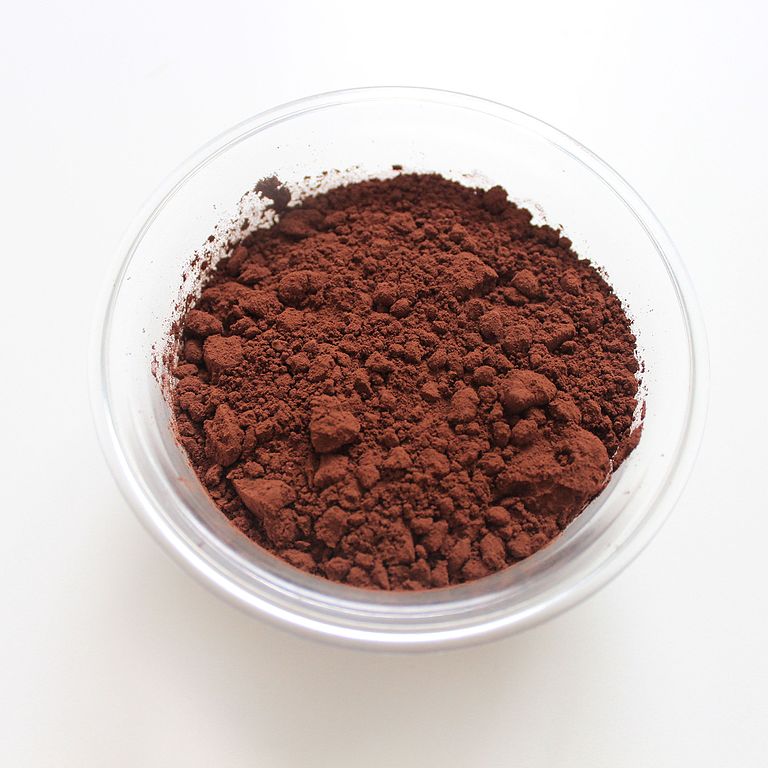
cocoa powder
versus
parsley
(100g each)
below using 2020 USDA and NIH data[1].
For a quick recap of significant nutrients and differences in cocoa powder and parsley:
- Both cocoa powder and parsley are high in calcium, dietary fiber, iron and potassium.
- Cocoa powder has more riboflavin, however, parsley contains more folate.
- Cocoa powder is an excellent source of protein.
- Parsley is an excellent source of Vitamin A, Vitamin C and Vitamin K.
USDA sources for nutritional information: Cocoa Powder (Cocoa, dry powder, unsweetened) and Parsley (Parsley, fresh) . Have a correction or suggestions? Shoot us an email.

Calories and Carbs
calories
Cocoa powder is high in calories and parsley has 84% less calories than cocoa powder - cocoa powder has 228 calories per 100 grams and parsley has 36 calories.
For macronutrient ratios, cocoa powder is lighter in protein, heavier in fat and similar to parsley for carbs. Cocoa powder has a macronutrient ratio of 18:54:29 and for parsley, 27:57:16 for protein, carbohydrates and fat from calories.
Macro Ratios from Calories:
| Cocoa Powder | Parsley | |
|---|---|---|
| Protein | 18% | 27% |
| Carbohydrates | 54% | 57% |
| Fat | 29% | 16% |
| Alcohol | ~ | ~ |
carbohydrates
Cocoa powder is high in carbohydrates and parsley has 89% less carbohydrates than cocoa powder - cocoa powder has 57.9g of total carbs per 100 grams and parsley has 6.3g of carbohydrates.
dietary fiber
Both cocoa powder and parsley are high in dietary fiber. Cocoa powder has 10 times more dietary fiber than parsley - cocoa powder has 37g of dietary fiber per 100 grams and parsley has 3.3g of dietary fiber.
sugar
Cocoa powder and parsley contain similar amounts of sugar - cocoa powder has 1.8g of sugar per 100 grams and parsley has 0.85g of sugar.
Protein
protein
Cocoa powder is an excellent source of protein and it has 560% more protein than parsley - cocoa powder has 19.6g of protein per 100 grams and parsley has 3g of protein.
Fat
saturated fat
Cocoa powder is high in saturated fat and parsley has 98% less saturated fat than cocoa powder - cocoa powder has 8.1g of saturated fat per 100 grams and parsley has 0.13g of saturated fat.
Vitamins
Vitamin C
Parsley is an excellent source of Vitamin C and it has more Vitamin C than cocoa powder - parsley has 133mg of Vitamin C per 100 grams and cocoa powder does not contain significant amounts.
Vitamin A
Parsley is an excellent source of Vitamin A and it has more Vitamin A than cocoa powder - parsley has 421ug of Vitamin A per 100 grams and cocoa powder does not contain significant amounts.
Vitamin E
Cocoa powder and parsley contain similar amounts of Vitamin E - cocoa powder has 0.1mg of Vitamin E per 100 grams and parsley has 0.75mg of Vitamin E.
Vitamin K
Parsley is an excellent source of Vitamin K and it has 655 times more Vitamin K than cocoa powder - cocoa powder has 2.5ug of Vitamin K per 100 grams and parsley has 1640ug of Vitamin K.
The B Vitamins
Cocoa powder has more riboflavin, however, parsley contains more folate. Both cocoa powder and parsley contain significant amounts of thiamin, niacin, pantothenic acid and Vitamin B6.
| Cocoa Powder | Parsley | |
|---|---|---|
| Thiamin | 0.078 MG | 0.086 MG |
| Riboflavin | 0.241 MG | 0.098 MG |
| Niacin | 2.185 MG | 1.313 MG |
| Pantothenic acid | 0.254 MG | 0.4 MG |
| Vitamin B6 | 0.118 MG | 0.09 MG |
| Folate | 32 UG | 152 UG |
Minerals
calcium
Both cocoa powder and parsley are high in calcium. Parsley has a little more calcium (8%) than cocoa powder by weight - cocoa powder has 128mg of calcium per 100 grams and parsley has 138mg of calcium.
iron
Both cocoa powder and parsley are high in iron. Cocoa powder has 124% more iron than parsley - cocoa powder has 13.9mg of iron per 100 grams and parsley has 6.2mg of iron.
potassium
Both cocoa powder and parsley are high in potassium. Cocoa powder has 175% more potassium than parsley - cocoa powder has 1524mg of potassium per 100 grams and parsley has 554mg of potassium.
Antioxidants and Phytonutrients
flavonoids
Naturally occuring in fruits and vegetables, flavonoids are associated with many health benefits and used in a variety of medicinal and pharmaceutical applications. [2][3]
For specific flavonoid compounds, cocoa powder has more quercetin than parsley per 100 grams, however, parsley contains more apigenin, luteolin, kaempferol and myricetin than cocoa powder per 100 grams.
| Cocoa Powder | Parsley | |
|---|---|---|
| Quercetin | 10.0 mg | 0.28 mg |
| apigenin | ~ | 215.46 mg |
| luteolin | ~ | 1.09 mg |
| kaempferol | ~ | 1.49 mg |
| myricetin | ~ | 14.84 mg |
carotenoids
Carotenoids are micronutrients commonly found in plants and some animal products. An example is beta-carotene, the notable carotenoid which is a popular source of Vitamin A.[4][5]
For specific types of carotenoids,
| Cocoa Powder | Parsley | |
|---|---|---|
| lutein + zeaxanthin | 38 UG | 5561 UG |
| beta-carotene | ~ | 5054 UG |
Omega-3 and Omega-6
omega 6s
Comparing omega-6 fatty acids, cocoa powder has more linoleic acid than parsley per 100 grams.
| Cocoa Powder | Parsley | |
|---|---|---|
| linoleic acid | 0.44 G | 0.115 G |
| Total | 0.44 G | 0.115 G |
Customize your serving size
The comparison below is by weight, but sometimes 100g isn't that intuitive of a measurement for food. View a custom portion comparison (e.g. cups, oz, package).
You can try adding or subtracting the amount of either Cocoa Powder or Parsley .
Note: The specific food items compared are: Cocoa Powder (Cocoa, dry powder, unsweetened) and Parsley (Parsley, fresh) .
Cocoa Powder g
()
|
Daily Values (%) |
Parsley g
()
|
|||||
|---|---|---|---|---|---|---|---|
| KCAL % |
|
5% | calories | 5% |
|
KCAL % | |
| G % |
|
5% | carbohydrates | 5% |
|
G % | |
| G % |
|
5% | dietary fiber | 5% |
|
G % | |
| G | 5% | sugar | 5% | G | |||
| G % |
|
5% | total fat | 5% |
|
G % | |
| G % |
|
5% | saturated fat | 5% |
|
G % | |
| G | 5% | monounsaturated fat | 5% | G | |||
| G | 5% | polyunsaturated fat | 5% | G | |||
| G | 5% | trans fat | 5% | G | |||
| MG | 5% | cholesterol | 5% | MG | |||
| MG % |
|
5% | sodium | 5% |
|
MG % | |
| 5% | Vitamins and Minerals | 5% | |||||
| UG % |
|
5% | Vitamin A | 5% |
|
UG % | |
| MG % |
|
5% | Vitamin C | 5% |
|
MG % | |
| IU % |
|
5% | Vitamin D | 5% |
|
IU % | |
| MG % |
|
5% | calcium | 5% |
|
MG % | |
| MG % |
|
5% | iron | 5% |
|
MG % | |
| MG % |
|
5% | magnesium | 5% |
|
MG % | |
| MG % |
|
5% | potassium | 5% |
|
MG % | |
| MG % |
|
5% | thiamin (Vit B1) | 5% |
|
MG % | |
| MG % |
|
5% | riboflavin (Vit B2) | 5% |
|
MG % | |
| MG % |
|
5% | niacin (Vit B3) | 5% |
|
MG % | |
| MG % |
|
5% | Vitamin B6 | 5% |
|
MG % | |
| MG % |
|
5% | pantothenic acid (Vit B5) | 5% |
|
MG % | |
| UG % |
|
5% | folate (Vit B9) | 5% |
|
UG % | |
| UG % |
|
5% | Vitamin B12 | 5% |
|
UG % | |
| MG % |
|
5% | Vitamin E | 5% |
|
MG % | |
| UG % |
|
5% | Vitamin K | 5% |
|
UG % | |
| G % |
|
5% | protein | 5% |
|
G % | |
| UG % |
|
5% | biotin (Vit B7) | 5% |
|
UG % | |
| MG % |
|
5% | choline | 5% |
|
MG % | |
| MG % |
|
5% | chlorine | 5% |
|
MG % | |
| UG % |
|
5% | chromium | 5% |
|
UG % | |
| MG % |
|
5% | copper | 5% |
|
MG % | |
| UG % |
|
5% | fluoride | 5% |
|
UG % | |
| UG % |
|
5% | iodine | 5% |
|
UG % | |
| MG % |
|
5% | manganese | 5% |
|
MG % | |
| UG % |
|
5% | molybdenum | 5% |
|
UG % | |
| MG % |
|
5% | phosphorus | 5% |
|
MG % | |
| UG % |
|
5% | selenium | 5% |
|
UG % | |
| MG % |
|
5% | zinc | 5% |
|
MG % | |
| G | 5% | Water | 5% | G | |||
| G | 5% | Starch | 5% | G | |||
| G | 5% | Alcohol | 5% | G | |||
FAQ
Does cocoa powder or parsley contain more calories in 100 grams?Cocoa powder is high in calories and parsley has 80% less calories than cocoa powder - cocoa powder has 228 calories in 100g and parsley has 36 calories.
Does cocoa powder or parsley have more carbohydrates?
By weight, cocoa powder is high in carbohydrates and parsley has 90% fewer carbohydrates than cocoa powder - cocoa powder has 57.9g of carbs for 100g and parsley has 6.3g of carbohydrates.
Does cocoa powder or parsley contain more calcium?
Both cocoa powder and parsley are high in calcium. Parsley has a little more calcium ( 10%) than cocoa powder by weight - cocoa powder has 128mg of calcium in 100 grams and parsley has 138mg of calcium.
Does cocoa powder or parsley contain more iron?
Both cocoa powder and parsley are high in iron. Cocoa powder has 120% more iron than parsley - cocoa powder has 13.9mg of iron in 100 grams and parsley has 6.2mg of iron.
Does cocoa powder or parsley contain more potassium?
Both cocoa powder and parsley are high in potassium. Cocoa powder has 180% more potassium than parsley - cocoa powder has 1524mg of potassium in 100 grams and parsley has 554mg of potassium.